
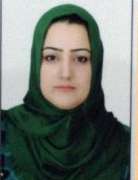
Academic Staff

Oct. 23, 2026, 10:11 p.m.
Najat Taher Mahmood (Master)
Lecturer
Lecturer in Moleculer Biology

Scientific Research Center
College of Science
University of Duhok

  • MSc in Molecular Biology, University of Duhok (2011-2014)
  • BSc. in Biology/Microbiology, University of Mosul (2001-2005)

As a lecturer and researcher with an MSc degree in Molecular Biology, I have gained extensive experience in teaching a diverse curriculum of scientific and laboratory courses within the Department of Biology, from 2015 to the present, covering essential subjects such as microbiology, microbial physiology, molecular biology, biotechnology techniques, histology, hematology, and immunology.

I have participated in numerous workshops and training courses on teaching the basic principles and working methods in molecular biology experiments, the PCR technique, and the use of the PCR machine.

Workshops and Training:

1-The general DNA technology workshop. (23-25/5/2022)

2- The general DNA technology workshop. (28-30/3/2022)

3- The general DNA technology workshop. (2025)

4- (First aid /Basic life support) Training course.

5-Large group learning/workshop/Medical education department.

Research

1-The Contribution of thrombophilic1 mutations to genetic susceptibility to deep venous thrombosis in Iraqi patients. Al-Allawi, Ameer IA Badi, Musheer A. Goran, Farida FA Nerweyi, Hawar MS Ballo, and Najat TM Al-Mzury. Faculty of medical Sciences Scientific Research Center University of Duhok, Iraq.

2- Association of the MTHFR C677T,factor V(Leiden) G1961A and Prothrombin Gene mutations with recurrent spontaneous aboration (RSA) in Duhok province.

3- HR2 Polymorphism in Deep Venous Thrombosis in Group of Patients from Duhok City.

4- The association of TP53(Arg72Pro) rs 1042522C>G Polymorphism and colorectal cancer susceptibility in Duhok individuals.

My research interests can be summarized as medical genetics and molecular biology, especially focusing on:

Genetic Risk Factors for Diseases. They study how specific gene mutations or polymorphisms affect the risk of different diseases, such as:

  • Cardiovascular disease
  • Cognitive decline
  • COVID-19 severity
  • Colorectal cancer
  • Pregnancy complications (recurrent abortion, RSA)
  • Deep venous thrombosis

Supervising graduation projects for fourth-year students in the Department of Life Sciences.