B.Sc. in Geology
Program Profile
The department of Geology was first established under the name of Applied Geology within the College of Engineering in August 2011 and received its first cohort students in October 2011.
Later in 2013, the department name has been changed to Geology within the College of Science.
The curriculum of the department is designed to be adheres to ABET requirements. The program is designed and regularly reviewed to meet the current and future needs of the Kurdistan Region and Iraq for oil and gas exploration, metals extractions, rocks processing for industries such as cement and building sectors. Laboratory sessions further strengthen students’ design abilities, teamwork, and hands-on technical skills.
The graduation project forms a core design part of the program. It builds creative problem-solving and solid teamwork. Internships give students real chances to use their skills on the job. These placements build industry links. They keep faculty tied to local needs that student projects can meet.
The program also offers elective courses. Students can adjust their studies to fit their interests and shifting market needs.
Occupational profiles of graduates
Geologists study the Earth’s structure, materials, and history to grasp natural processes and find resources. They work in fields and labs, testing rock, soil, and water samples, and help protect nature, manage resources, and assess hazards
Therefore, graduates of this programme are equipped with a solid foundation in geology. Their technical expertise, problem-solving abilities, and teamwork experience prepare them for diverse careers in Oil and gas industry and research ensuring they can adapt to the evolving technological and industrial demands.
Qualification awarded
Bachelor of Science in Geology
Length of programme
4 years (8 semesters)
Number of credits
240 ECTS credits
Mode of Study
Full time on campus
Read more about the programme
Get detailed information about the programme requirements, courses, credits, and educational objectives as a PDF file.
Program Educational Objectives (PEOs)
The Geology department (Geo) sets Program Educational Objectives (POEs) to prepare graduates who will:
PO1
Assist students in pursuing advanced degrees and help them contribute to geological research in Iraq and abroad.
PO2
Make meaningful contributions to scientific, industrial, or government groups while acting responsibly and caring for the environment.
PO3
Pursue lifelong learning, career growth, or advanced studies to stay prepared for new challenges in geoscience.
Program Learning Outcomes
Students who graduate from geology department should be able to:
PLO1: Show a clear understanding of Earth's systems, materials, and processes. This includes knowledge of mineralogy, petrology, stratigraphy, and structural geology.
PLO2: Use field techniques like mapping, collecting samples, and logging rock layers. Use lab methods to study rocks, minerals, and fossils.
PLO3: Evaluate natural resources (e.g., oil, gas, groundwater, and minerals) and assess environmental impacts of geological processes and human activities, especially in Kurdistan’s resource-rich regions.
PLO4: Analyse geological data to address issues related to natural hazards, resource use, and land planning.
PLO5: Using GIS, remote sensing, and geological modelling software to interpret and visualize geological data.
PLO6: Share geological ideas and discoveries clearly through reports, talks, and images. Present these to scientists and the general public alike.
PLO7: Show ethical awareness in geological work by using resources responsibly, keeping data honest, and thinking about how actions affect society and the environment.
PLO8: Keep learning new skills regularly and stay ready to continue your studies or grow in your career in geology and related fields.
General Requirement for Completing the Program
Work-based learning
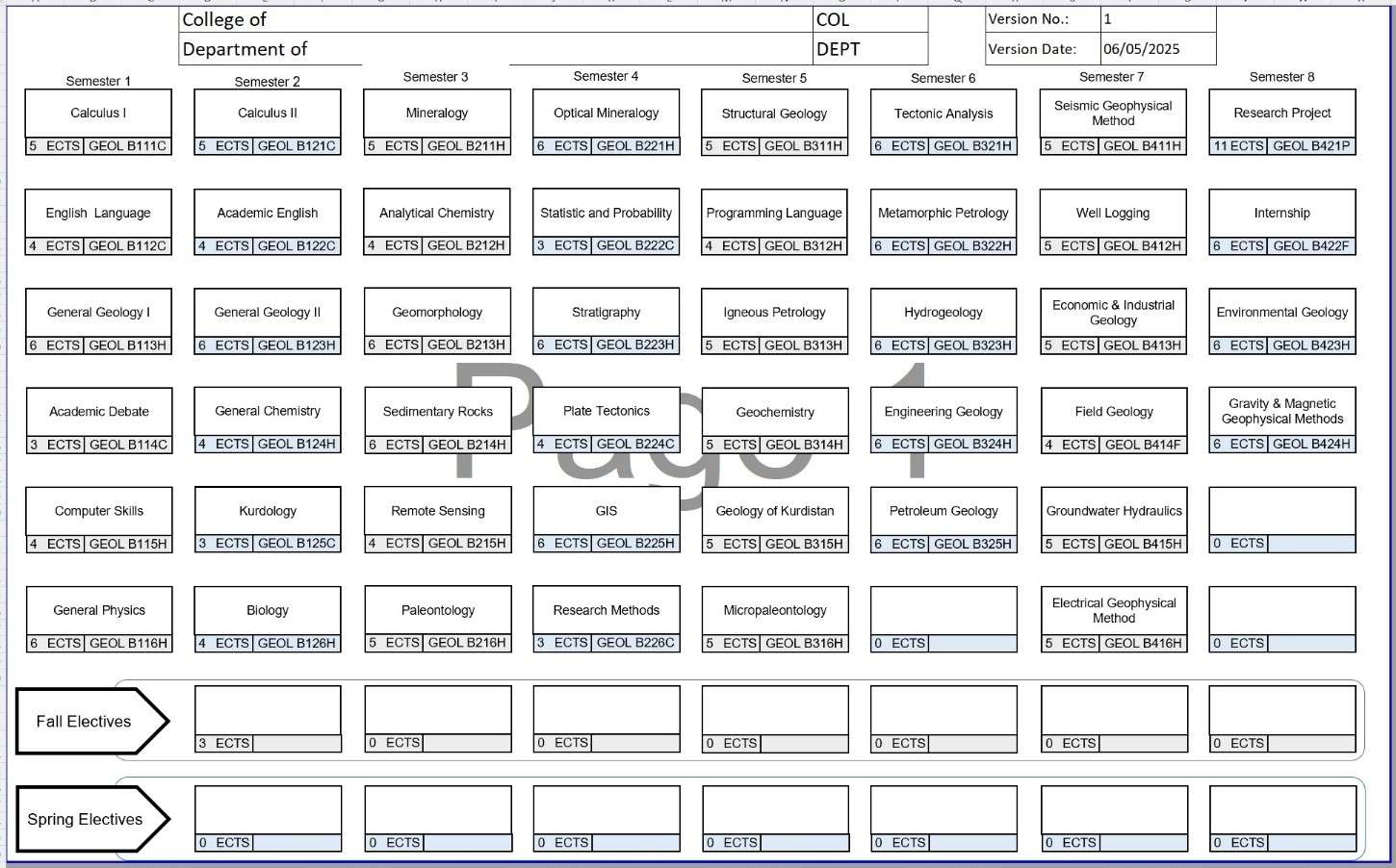
The programme includes a 5 ECTS OF an intensive two week Fieldwork, semester 7, in which students can apply their theoretical knowledge at the field such as mapping, collecting samples, and logging rock layers.
Access to further studies
Graduates are eligible for further studies at higher diploma programmes or second-cycle (Master’s) degrees and PhD in relevant disciplines.
Internship
The programme includes a 6 ECTS internship opportunity in semester 8
Programme structure diagram with credits
Yearly Timeline
Sept. 1, 2026
⚠️ First year students start around mid-October
⚠️ First year students start exams around 20 of January
July 1, 2027
Check out the full academic calendar on UoD's webstie.
Programme Coordinator

Lecturer in Environmental Pollution
Geology
College of Science
University of Duhok
Apply to the Programme
Public undergraduate admissions in the KRG region are managed centrally by the Ministry of Higher Education through the online ZankoLine portal (regayzanko.com). After Grade 12 Baccalaureate results are released, high schools provide students with unique login credentials to rank their preferred universities and B.Sc. majors during a 10–14 day registration window. Final placement is automatically determined by the student's Grade 12 average, subject choices, and department capacity.