
B.Sc. in Mathematics
Program Profile
The BSc in Mathematics aims to provide students with a strong foundation in pure and applied mathematics. The program emphasizes analytical thinking, problem-solving, logical reasoning, and the application of mathematical techniques in interdisciplinary contexts. Students are prepared for careers in education, research, industry, and further graduate studies.
Occupational profiles of graduates
Occupational profiles include the following, but are not limited to:
- Education Sector
- Research and Higher Education
- Data Science and Statistics Sector
- Industry and Technology Sector
- Banking, Finance, and Business Sector
- Government and Public Sector
Qualification awarded
Bachelor of Science (BSc) in Mathematics
Length of programme
4 years
Number of credits
240 ECTS credits
Mode of Study
Full time on campus
Read more about the programme
Get detailed information about the programme requirements, courses, credits, and educational objectives as a PDF file.
Program Educational Objectives (PEOs)
- Equip students with foundational knowledge in core mathematical areas.
- Develop analytical, problem-solving, and critical thinking skills.
- Enable students to apply mathematics in interdisciplinary and real-world contexts.
- Foster independent learning, research skills, and lifelong learning.
- Prepare graduates for professional and academic careers with ethical awareness and effective communication skills.
Program Learning Outcomes
- Demonstrate mastery of core mathematical areas such as calculus, linear algebra, real and complex analysis, abstract algebra, and differential equations.
- Construct rigorous mathematical proofs and apply logical reasoning to formulate and validate mathematical arguments.
Version No.: 3 Page 2 | 4
Date approved:
- Construct rigorous mathematical proofs and apply logical reasoning to formulate and validate mathematical arguments.
- Model and solve real-world problems using appropriate mathematical methods including numerical, statistical, and optimization techniques.
- Use mathematical software and tools (e.g., MATLAB, SPSS) to analyze data, visualize results, and support mathematical investigations.
- Communicate mathematical ideas effectively, both orally and in writing, to peers and non-specialist audiences.
- Apply advanced mathematical concepts in specialized fields such as topology, graph heory, functional analysis, and partial differential equations.
- Demonstrate the ability to learn independently, analyse problems critically, and explore new areas of mathematics through self-directed study or research.
- Collaborate effectively in teams to solve problems, complete projects, and present mathematical findings.
- Understand the historical development and societal role of mathematics and its ethical applications in science and technology.
- Meet the entry requirements for postgraduate education or professional employment in mathematics or related disciplines.
Programme structure diagram with credits
Yearly Timeline
Sept. 1, 2026
⚠️ First year students start around mid-October
⚠️ First year students start exams around 20 of January
July 1, 2027
Check out the full academic calendar on UoD's webstie.
Programme Coordinator
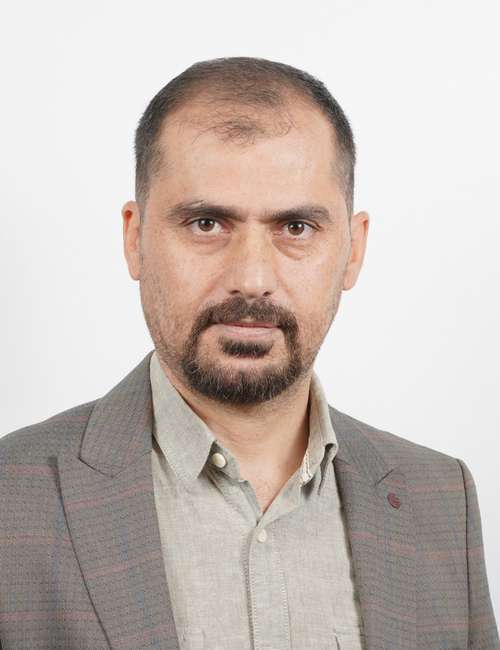
Mathematics
College of Science
University of Duhok
Apply to the Programme
Public undergraduate admissions in the KRG region are managed centrally by the Ministry of Higher Education through the online ZankoLine portal (regayzanko.com). After Grade 12 Baccalaureate results are released, high schools provide students with unique login credentials to rank their preferred universities and B.Sc. majors during a 10–14 day registration window. Final placement is automatically determined by the student's Grade 12 average, subject choices, and department capacity.